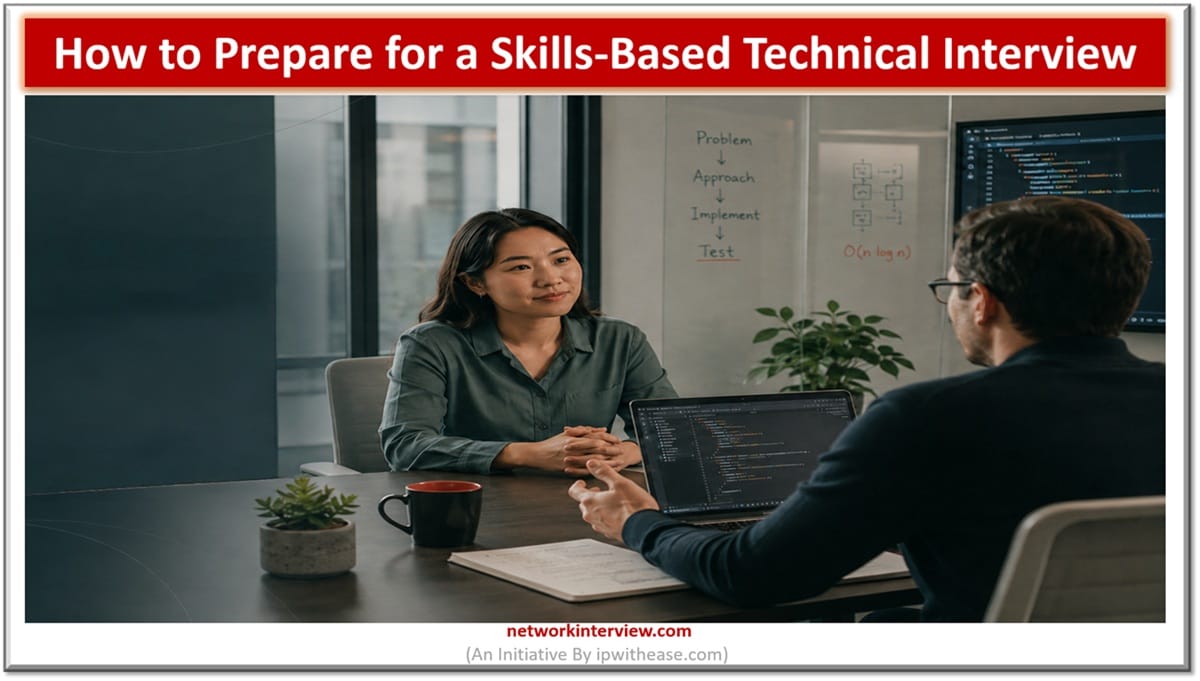
How to Prepare for a Skills-Based Technical Interview (And Why More Companies Are Using Them)
If your last few technical interviews have felt different from what you expected, you’re not imagining it. Fewer companies are relying on resumes and gut-feel conversations to decide who gets hired. Instead, they’re building interview processes around a simple question: can you actually do the work?
This shift toward skills-based hiring is reshaping what candidates need to prepare for. A strong resume might still get you in the door, but it won’t get you the offer. Here’s what’s changing, why it’s happening, and how to walk into your next interview ready for it.
Why Companies Are Moving Away from Resume-First Hiring
For years, hiring often worked like this: a recruiter scanned resumes for keywords and job titles, shortlisted a handful of candidates, and let a few rounds of conversational interviews decide the rest. The problem is that this approach rewards people who are good at describing their experience, not necessarily people who are good at the job itself.
Research on hiring outcomes has consistently found that structured, skills-based assessments predict job performance more reliably than unstructured interviews or years-of-experience filters alone. Companies that have adopted this approach report fewer bad hires, more diverse candidate pools, and less time wasted on interviews that were never going to lead anywhere.
For candidates, this is actually good news. It means you’re less likely to get filtered out because your resume doesn’t use the “right” buzzwords, and more likely to get a fair shot if you can genuinely do the work. But it also means the old playbook of rehearsing behavioral answers and hoping for a friendly conversation isn’t enough anymore.
What a Skills-Based Technical Interview Process Actually Looks Like
Skills-based hiring rarely means a single interview. It usually involves several layers, each designed to test something different:
- Online assessments. Before you even talk to a human, you may be asked to complete a cognitive ability test, a knowledge-based quiz, or a short coding challenge. These are designed to be quick but revealing, so don’t underestimate them just because they’re not face-to-face.
- Role-based challenges. Instead of asking you to describe how you’d solve a problem, many companies now ask you to actually solve one. This might mean building a small application, debugging a broken script, designing a database schema, or working through a mock client scenario. The goal is to see your real process, not a rehearsed answer.
- Technical interviews with practitioners. When you do get to the interview stage, expect the person across the table (or the screen) to know the technology well enough to ask follow-up questions. Surface-level answers tend to get exposed quickly.
- Culture and communication evaluation. Skills alone don’t guarantee a good hire. Many processes now include a structured conversation about how you work with others, handle feedback, and fit into a team’s working style. This isn’t just a formality; it often carries real weight in the final decision.
How to Prepare When You Don’t Know Exactly What You’ll Face
Because skills-based interviews vary so much by employer, you can’t prepare for one specific format the way you might cram for a standardized test. Instead, focus on building habits that hold up no matter what you’re asked to do.
- Practice explaining your thinking out loud. In a role-based challenge, how you approach a problem often matters as much as whether you land on the right answer. Get comfortable narrating your reasoning, even when you’re unsure, so an interviewer can follow your logic instead of just watching you type in silence.
- Do a few timed challenges before the real thing. If it’s been a while since you’ve solved a problem under time pressure, the clock alone can throw you off. Look for practice problems similar to what the role might require and give yourself a realistic time limit.
- Treat take-home assignments like real deliverables. A rushed, messy take-home project signals more than a wrong answer ever could. Clean structure, clear comments, and a short explanation of your decisions go a long way, even if the solution itself isn’t perfect.
- Ask what to expect. It’s completely reasonable to ask a recruiter or hiring manager what the interview process involves before you start. Most will tell you, and knowing whether to expect a live coding session, a take-home project, or a panel discussion lets you prepare more precisely.
- Don’t skip the “soft” rounds. Candidates sometimes treat culture or communication interviews as a formality once they’ve cleared the technical bar. In a skills-based process, that round is often just as deliberately evaluated as the technical ones.
The Bigger Trend Behind the Shift
This move toward layered, evidence-based hiring isn’t limited to any one industry, but it’s especially visible in technology roles, where the cost of a bad hire is high and the skills required change quickly. Specialized IT staffing solutions have increasingly built their entire placement process around this idea, using structured assessments and role-based challenges to verify ability before a candidate ever reaches a client’s interview panel. The logic is straightforward: when a role requires very specific technical skills, a conversation alone isn’t enough to confirm someone can deliver on day one.
For job seekers, understanding this shift matters even if you’re applying directly rather than through a recruiter. The more you can demonstrate real, verifiable ability, rather than just describe it, the more competitive you’ll be in a hiring landscape that increasingly wants proof over promises.
Final Thoughts
Skills-based interviews can feel like more work upfront, but they also give capable candidates a fairer shot, especially those whose resumes don’t tell the whole story. The best way to prepare isn’t to memorize answers. It’s to get comfortable showing your work, thinking out loud, and treating every stage of the process, technical or otherwise, as a real evaluation rather than a formality. Candidates who adjust to this shift now will be far better positioned as more employers adopt it.

You may also like
10 Best GEO Agencies for AI Search Visibility