Introduction
In the era of enterprise computing organizations are seeking ways to develop, deploy and manage applications in a more efficient , fast and scalable manner. Traditionally applications are tightly linked to servers and the operating systems which executed their code. Organizations spend a lot of time, efforts and money to allocate and manage their systems and organizations want to expand their minimal resources to maintain computer infrastructure.
Virtual machines have dramatically increased server efficiency. Instead of deploying one server for each application, multiple applications can be run on a single computer. Containers are the next level of server virtualization. They help to address the limitations which come with virtual machines such as reduction in portability and inadequate resources.
Today we look more in detail about two important terminologies Serverless computing and containers, understand their key differences, benefits and purpose they adopted for.
About Serverless Computing
Serverless computing is a method of giving backend services on a used basis. Serverless providers allow users to write and deploy code without any hassles or worry about the underlying infrastructure.
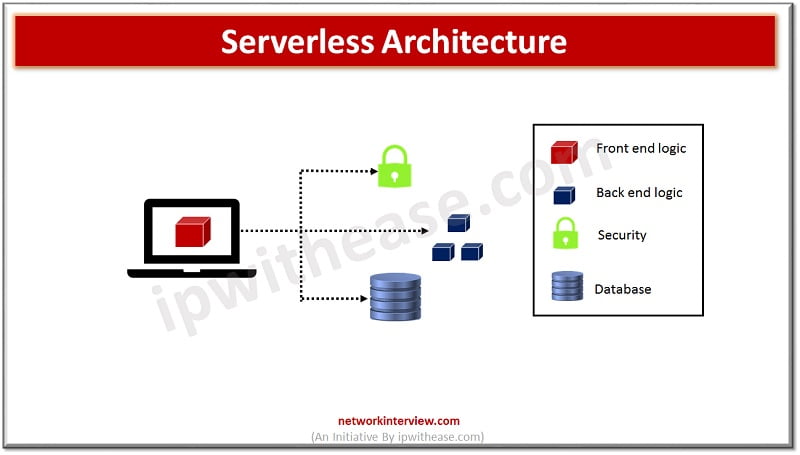
Companies taking backend services from provider are charged on the basis of their computation need and do not have to reserve and pay fixed amount of bandwidth on number of servers, the service is auto scaling in nature.
About Containers
Containers have both application and all its elements which application requires to run properly which includes system libraries, system settings, and any other dependencies. Containers require only one thing to be hosted and run in order to perform their function.
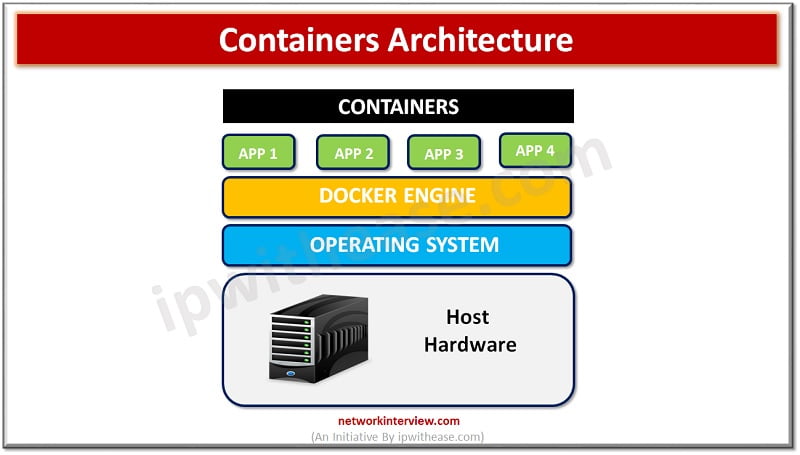
Any kind of application can run in a container. A containerized application will run the same way as in traditional server model irrespective of location they are hosted and can be easily moved and deployed wherever needed similar to physical ship containers and are of standard size and can be shipped anywhere via a variety of means of transport regardless of what they hold or contain.
Containers are a way to partition machine, servers into separate user space environments so that each environment runs only one application and does not interact with any other partitioned sections on the system. Each container shares a machine kernel with other containers but it runs as if it is there on the system alone.
Comparison Table: Serverless Computing vs Containers
Below table summarizes the difference table the two terminologies:
PARAMETER | SERVERLESS COMPUTING | CONTAINERS |
| Operations | Serverless computing runs on servers but it is serverless vendor to provision server space as required by the application | Containers live on one machine at a time and use the operating system of that machine |
| Scalability | Serverless architecture is based on pay as you use model , so you can get resources and take them as per your requirements | In container based architecture the number of containers deployed is pre-determined by the developer. |
| Costs | There is no continued expenses in case of serverless computing because application code does not run unless explicitly called. Instead developers charged for server capacity of their application based on actual usage | Containers are constantly running therefore cloud providers charge for server space even if application is not used sometimes |
| Maintenance | A serverless architecture has no backend to manage and vendor takes care of all management and software updates for servers which run the code | Containers are hosted on cloud but cloud providers do not update or maintain them developers have to manage and update each container as they deploy them |
| Time of deployment | Serverless applications are live as soon as code upload happens | Containers take longer to setup initially as it is necessary to configure system settings , libraries etc. once configured containers takes few seconds to deploy |
| Testing | It is tough to test serverless applications as backend environment is tough to replicate on local environment | Containers run same no matter where they are deployed it is easy to test a container based application before its deployment into product environment |
 | ||
Download the comparison table: Server less Computing vs Containers
Conclusion
Developers can choose between serverless architecture or containers depending on their requirements. Choice of serverless architecture will let developers to release and iterate new applications in a faster manner without worrying about its scalability needs. Container based architecture will give developers more control over the environment the applications are hosted and run on and ideal for legacy applications or one can also look for hybrid architecture as per the need.
Continue Reading:
Serverless Architecture vs Traditional Architecture
Top 10 Serverless Compute Providers