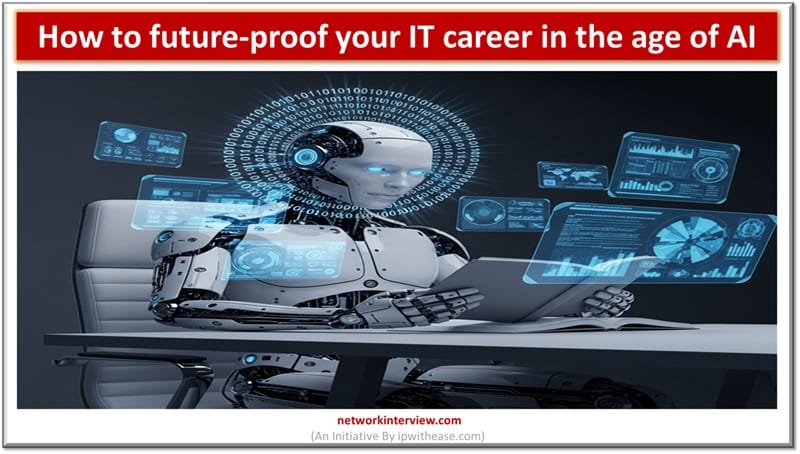
How to future-proof your IT career in the age of AI
The days are gone where people acquired a skill or earned success in a job competitive exam, got a job and held it till eternity. To secure a job and continue it would mean a stable career – learn during work a bit, gain experience, build a resume over the years and climb the corporate ladder.
As per recent LinkedIn data, top 10% global professionals hold job titles which did not exist in 2000. Since then, the pace has changed with the rapid rise of artificial intelligence as it has brought new roles on horizon or restructured the existing roles. Roles such as AI engineer, machine learning engineer, cyber security specialists, ethical hackers etc.
The most effective strategy to navigate this ‘AI tide’ is to move from being a worker performing repetitive tasks rather than becoming a problem solver with the aid of AI. Technical AI expertise and unique human skill balanced blending is key to survive and future-proof your IT career.
In this article we will learn more in detail about how IT professionals can future-proof their IT careers in the age of AI.
AI and IT Landscape
AI is rapidly replacing manual, repetitive, and fixed tasks across industries – data entry operators, customer support executives, receptionists, manufacturing line-workers, telemarketing professionals, bookkeepers and clerking jobs are diminishing fast. As AI excels at number crunching, repetitive, rule based and data heavy tasks.
Related: 3 Different Types of Artificial Intelligence – ANI, AGI and ASI
Skills to Acquire in the Age of AI for Survival
Certain skills which AI could never replace needs to be cultivated and nurtured to sustain in digital world such as:
- Emotional Intelligence (EI) Machines can be used to detect tone and sentiments but it cannot actually feel those emotions. Human centric roles which require empathy, compassion and emotional awareness can be replicated by an AI algorithm.
- Critical Thinking and Decision Making – Number crunching is fine but AI can’t make such decisions for uncertain situations. Ethical judgement, decision making and strategic foresight and key skills to sail the tide.
- Creativity and Innovation – AI can help in composing music, creating art works but all based on model acquired knowledge already created by the ultimate human innovation engine.
- Technical Fluency and Data Literacy – understanding working with AI is a fundamental need. It means you should be well versed and understand usage of AI powered tools, communicate across cross-functional teams and understand the ethical implications of AI automation.
- Lifelong Learning and Adaptability – best skill is to learn and be relevant to the job market. Re-skill and upskill regularly, acquire online certifications, attend AI workshops, join AI literacy programs and build a mindset of constant reinvention.
So, a blend of technology, skills, knowledge along with curiosity, creativity and being human together makes a future-proof career. It is not about being most automated but most adaptable that matters for the future growth in the middle of ‘AI tide’.
AI and Human Relationship
As with the emergence of AI, the future of work is shaping on collaboration rather than competition between machines and humans. AI has exceptional capabilities of analyzing data, identifying patterns, and doing repetitive tasks with precious needs to be aided with human intuition, values and purpose.
Across industries such as healthcare, education, law and arts AI can be instrumental as a tool or assistant but final judgement, spark of innovation and ethical decision making is to be led by humans only. For example, in the healthcare field AI can help in diagnosis of a disease based on patient vitals and history but only a medical professional can understand patient fears, anxiety and life into context to make informed and compensated decisions.