Table of Contents
How referrals, personal branding, and content creation have quietly overtaken the traditional resume-submit cycle — and what you must do differently to get hired today.
Picture this: You spend three hours crafting the perfect resume. You tailor your cover letter with surgical precision. You hit “Apply.” Then — silence. Two weeks later, a form rejection from a recruiter who never read past your headline.
Sound familiar? You’re not alone. And more importantly, you’re not failing — the system is just broken.
The traditional job search — post resume, wait, repeat — is effectively dead. It hasn’t been officially declared, but the numbers don’t lie. In 2026, most jobs are filled before they’re ever publicly posted. Most offers go to candidates who were never strangers to begin with.
70% | 9× | <10s |
|---|---|---|
| of jobs are filled through networking, never publicly listed | more likely to get hired via referral vs. cold application | average time a recruiter spends on an unsolicited resume |
So what actually works? Three forces have quietly taken over: referrals, personal branding, and content creation. Let’s break them down.
The Old Playbook, and Why it Collapsed
For decades, job searching meant updating your resume, scouring job boards, and firing off applications. Companies built HR systems to manage the flood. Everyone played by the same rules.
Then a few things happened simultaneously: AI made it trivially easy to mass-apply. ATS filters became ruthless gatekeepers. Recruiters got buried under thousands of near-identical applications. The signal-to-noise ratio collapsed.
“When everyone applies the same way, standing out means doing something entirely different.”
The resume-submit funnel didn’t just become less effective — it became a trap. The more effort people poured in, the less return they got. The candidates who thrived were doing something else entirely.
Related: What Recruiters Are Looking for in IT Candidates Post AI
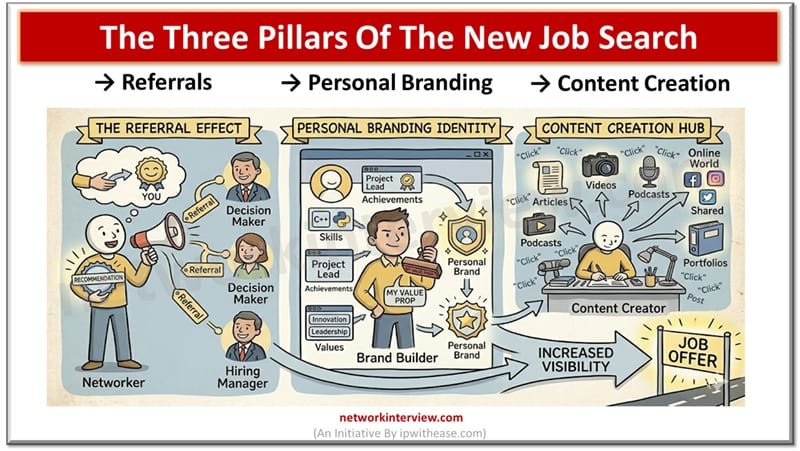
The Three Pillars of the New Job Search
1 Referrals — The Hidden Job Market
A warm introduction from a trusted contact bypasses every filter in a recruiter’s stack. Your resume goes from the pile to the top of the pile — instantly. In 2026, cultivating genuine relationships inside and around companies you want to work for is not optional. It’s the primary strategy. The goal isn’t to “network” in the transactional sense — it’s to build real relationships long before you need a job.
2 Personal Branding — Your 24/7 Recruiter
Your LinkedIn profile, your portfolio, your GitHub, your online presence — these work for you while you sleep. Hiring managers increasingly search before they post. If your digital footprint clearly shows what you know, what you’ve built, and how you think, you become discoverable. Personal branding in 2026 doesn’t mean performative self-promotion. It means being genuinely visible in your area of expertise.
3 Content Creation — The Inbound Job Magnet
Sharing what you know — through posts, case studies, side projects, or even short videos — attracts opportunities you never had to apply for. Recruiters follow creators. Founders DM people whose posts resonate. One well-written breakdown of a problem in your field can do more for your career than 50 cold applications. This is the inbound job search, and it has made traditional applications feel like fax machines.
What this Looks Like in Practice
You don’t need to become an influencer. You don’t need 50,000 LinkedIn followers. The bar is lower and more specific than most people realize.
For Referrals
Identify 10–15 companies you’d genuinely love to work at. Find second-degree connections inside them. Reach out with a specific, genuine message — not “Can you refer me?” but “I loved what your team did with X. I’ve been working on something similar and would love a 15-minute chat.” Build the relationship first. The referral follows naturally.
For Personal Branding
Audit your LinkedIn profile today. Does your headline say what you do and for whom? Does your About section show what you’re capable of — not just where you’ve been? Add a portfolio link. Pin your best project. Make it so clear what you offer that a recruiter landing on your page feels they already know why they should hire you.
For Content Creation
Start small: one post a week about something you’re learning, building, or thinking about in your field. Share your process, not just your results. Document what you know. Teach one concept you understand deeply. You will be surprised how quickly this compounds — and how many unexpected doors it opens.
“The best time to start building your presence was three years ago. The second best time is today.”
The Mindset Shift that Changes Everything
The old job search was reactive: something opens up, you apply, you wait. The new job search is proactive: you become someone people already know, trust, and think of first when a role comes up.
This requires patience that the “spray and pray” application strategy doesn’t. But the return is categorically different. People who land great jobs in 2026 are not better at writing resumes. They’re better at being known.
The job search isn’t dead because jobs are scarce. It’s dead because the way most people search has become the least effective path to the opportunities that matter. The replacement is more human, more visible, and — once you lean into it — far more interesting.